Sunday, December 12, 2010

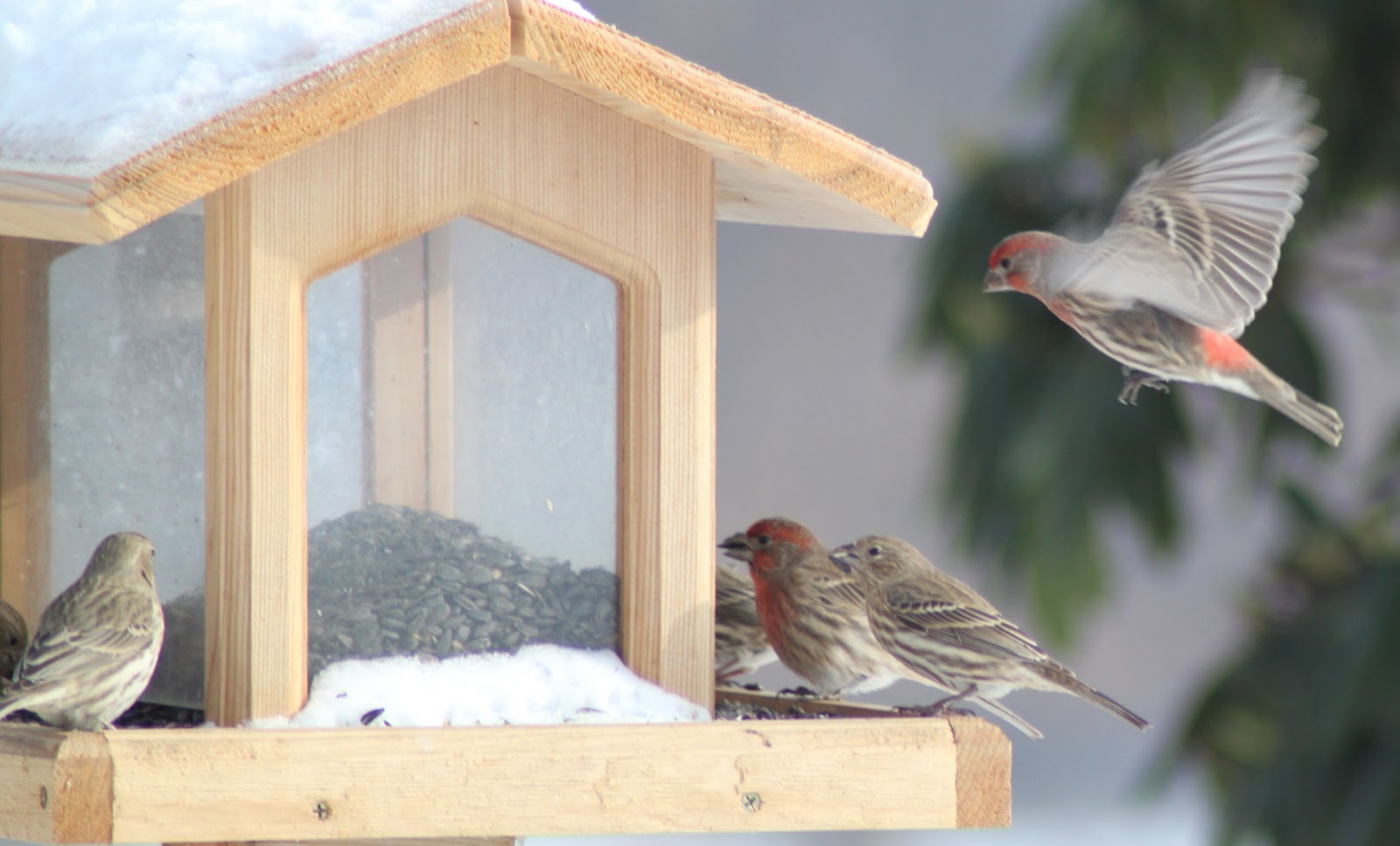
Flying Finches

Since the Blue Jays were not around the finches were finally able to eat at the feeder. The male House Finch is the rosy red ones and the females are the brownish striped. A few Goldfinches are in the pictures also, with a Tufted Titmouse flying in. They have a wonderful twittering song and especially love the thistle and sunflower seeds. Originally from Mexico, the House Finch resembles the Purple Finch. The coloring of the Purple Finch is more of a raspberry red and the female is also the brownish striped.
 A Tufted Titmouse coming in.


Saturday, December 11, 2010

Song Sparrow

Checking all of the bird pictures, I can only guess I am correct that this is a Song Sparrow. I didn't realize I had gotten its picture flying off the branch. As I am hiding at the window in the kitchen wishing I had a good blind set up outside to capture better shots.

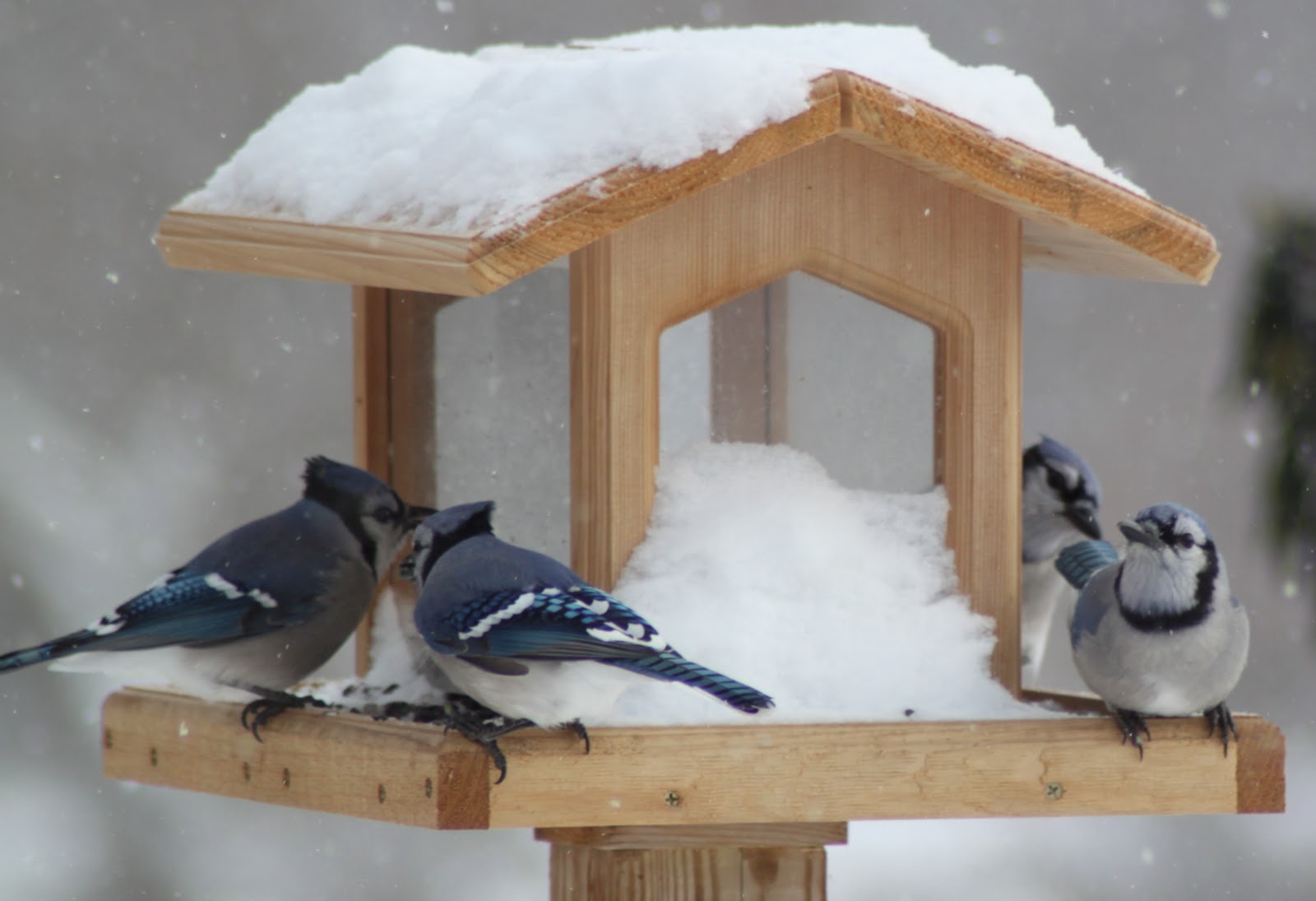
Bully Birds

Blue Jays are always considered the big bullies at the feeders. They fly in fast and their vocalizations intimidate and scare other birds. They have a variety of sounds and can mimic a hawk call. Known for their tight family bonds, they are very aggressive and territorial in their nesting and feeding areas, and will chase off cats, dogs and even humans. At the feeders they will stuff the seeds in a throat pouch to cache elsewhere. Of course some of the seeds and nuts are never recovered and these will eventually grow into new trees and plants. It has been stated that their fondness of acorns is credited with helping spread oak trees after the last glacial period. Intelligent birds who will watch a person planting seeds and afterwards will go and dig up and eat the seeds. Most likely they are partly to blame for all of the sunflower seeds I had planted, and then had to replant them all this past Spring. While they are all at the feeder stuffing themselves, the other poor birds are perched by waiting for their turn. Blue Jays hold the nut with their feet and crack it open with its bill. A female and male are identical in markings with the female a little smaller, this makes them hard to identify.


Saturday, November 27, 2010

Fall Cleanup

This is my son Matthew who just whines when it comes time to help with the leaves. He only has to dump them in the garden. My husband used a commercial leaf blower this year that did the job fast, then I used my shredder and made beautiful mulch to put around my trees and shrubs. Matthew states every year that he wants to chop all the trees down. This past Spring I planted 7 more maple trees, he most likely will be moving far away before those trees mature.

Berries for Birds

A garden full of berries are irresistible to birds.Choosing the correct berry producing shrubs and trees are like having a "living bird feeder." The birds that normally are insect eaters will switch their diet in the winter to eat berries. Some of the common insect eating birds such as robins, bluebirds, waxwings, chickadees, etc., will not find those insects in the harsh winters, so the berries will help them survive those cold months.

Issai Beautyberry
The Beautyberry is a graceful deciduous shrub that produces pink flowers in the Spring, followed by beautiful purple berries in late Summer.


Holly

The red berries of the Holly are a favorite of the bluebirds. You will need to plant a male holly to pollinize the female plants. I purchased 3 female and planted a male about 20 feet from them.

Autumn Jazz Arrowwood Viburnum

I was very fortunate to purchase 5 Arrowwood Viburnum at clearance this Fall. They look a little scraggly now with losing their leaves, they were very healthy looking when I bought them for only $5 a piece. The Viburnums provide fruit, flowers, cover, and beautiful fall colors. Some will grow 10-12 feet high and also as wide. The ones I have on order for the birds are: American Cranberry High Bush, Blue Muffin, and Nannyberry. They produce an abundant amount of fruit.

Centurion Crabapple

Another of my wonderful sale finds were these crabapples at $4 a piece this Fall. I was thrilled they were healthy and so cheap. I planted 3 other crabapples "Prairiefire," at only a small discounted price this Fall, but I was still happy to get them  and hopefully they survive the winter.


Winterberries
Ilex Verticillata "Black Alder"
These winterberries are a native holly. You also need a male to pollenize the females. The berry-laden plants are prized by craft enthusiasts for floral arrangements, wreaths, etc. But they are more important for their berries which stay on into late winter for food. 40 known bird species, small mammals and even deer are known to eat this fruit. The dense branches will also provide shelter. These can grow 10 feet high, a showstopper in winter against the white snow with their bright red berries.

Tuesday, November 23, 2010

Mourning Dove

This dove perched on a branch for hours while it was raining out. They are slow to notice approaching threats, I always have to open the door and yell to them to get moving before I put the dogs out. They never seem to hear us coming when they are in the gardens eating the flower seeds. These birds like to eat waste grains. They are prey for cats, hawks, squirrels and of course hunters. Such a shame to hunt a beautiful bird like this. Taking pictures through my window will not be as clear as I would like, but better than hiding behind a bush and freezing waiting for a good shot.

Monday, November 22, 2010

Bluebird House

This is my new bluebird house which is the "Ultimate." This house is made from recycled milk jugs and plastic bottles, and surprising, made in the USA, which is a great plus. It is from Birds Choice who is a member of the Wild Bird Feeding Industry, the Cornell Lab of Ornithology, the National Bluebird Society and the Purple Martin Conservation Ass. It has a lifetime guarantee to never crack, split of fade. The side door opens for easy cleaning, and the other door for viewing. An overhang roof, vents and drainage holes and a predator-resistant entrance hole. And they also used stainless steel screws. A very well constructed house. Expecting the Tree Swallows to use a few of the Bluebird houses when they come back in the Spring, I have to make sure I have enough.


A screen did come with this house for the purpose of Blowfly larvae which will get into the nest and the larvae will feed on the blood of the nestlings. Death sometimes occurs. The larvae feed at night, then during the day they move downward in the nesting material. The screen is a hopeful help, some studies are stating this, because the larvae will fall through the screen to the bottom of the box and cannot get back to the material. A single nest may contain as many as 200 larvae. The Bluebirds do not mind if you check the nest and nestlings. Remove the entire nest and scrap any larvae at the bottom, throwing this away or burning infested nests. You can also replace their nest with dry grass clippings if there is an infestation. Carefully transferring the young. Clean the box after the nestlings have fledged, use a weak solution of bleach and water.


Female Bluebird watching and waiting for me to put mealworms in the feeder which is right below her. They always can spot me from a distance and come and perch high in the trees near their feeder.


This female Bluebird is waiting on the roof for the mealworms. I could hear the male farther away, knowing he was coming also.